
Preventing Electrical Fires in Older Homes
Last Updated: November 19, 2026
Quick Summary
Preventing electrical fires in older homes starts with an EICR to expose aged rubber-insulated cable, undersized circuits and missing RCD protection. Fit RCD protection at the consumer unit, never overload or daisy-chain extension leads, and call an electrician at any burning smell or scorched socket.
Vulcanised India rubber cable hardens, cracks and crumbles to dust when disturbed.
A consumer unit needs replacing when it lacks RCD protection or has rewirable fuses.
An EICR grades faults C1, C2, C3 or FI; any C1 or C2 makes it unsatisfactory.
Never daisy-chain one extension lead into another; have more sockets installed instead.
Safe DIY covers replacing a plug, changing a lamp and resetting a tripped RCD once.
Worried about the wiring in your older home?
Bright Sparx Electrical provides certified electrical inspections, rewires and consumer unit upgrades across South Wales.
Table of Contents
Why Older Homes Carry a Higher Electrical Fire Risk
Older properties were wired for a different age. Circuits installed decades ago were designed for a handful of lights and perhaps one television, not the array of kettles, chargers, heat pumps and home appliances a modern household runs at once. That mismatch sits at the heart of most electrical fires.
Older housing stock commonly shows hardened, cracked insulation, circuits pushed beyond their original design load, and consumer units with no residual current device protection. The wiring may still "work", which is precisely what makes it dangerous.
Electrical fires rarely announce themselves, smouldering inside a wall cavity or behind a socket faceplate long before anything visible happens. The risk compounds in older homes because the materials have aged: mid-twentieth-century rubber-insulated cable becomes brittle, and old fabric insulation crumbles when disturbed.
Three factors make older properties riskier than modern builds:
Undersized circuits carrying loads they were never rated for
Deteriorated wiring insulation that exposes live conductors
Limited or absent RCD protection at the consumer unit
None of these are visible to a homeowner without inspection. That is why a proper electrical safety check matters more in a 1930s semi than in a new-build.

Signs of Faulty Wiring in Old Houses You Should Never Ignore
The clearest warning signs of faulty wiring are burning smells near sockets, discoloured or scorched faceplates, fuses that trip repeatedly, and lights that flicker when appliances switch on. Any one of these warrants an electrician's inspection before another day passes.
Most people dismiss the early signals: a socket that feels warm, a faint buzzing behind a switch, a plug that sparks as it goes in. These are symptoms, not quirks of an old house. A common mistake is treating a tripping circuit breaker as an inconvenience to reset rather than a fault to investigate.
Watch out: a burning smell with no obvious source is the one sign you should never sit on. Switch off at the mains and call an electrician immediately.
Other warning signs worth taking seriously:
Frayed cords / flexes or cracked plugs on appliances
Sockets that crackle or feel hot to the touch
A burning smell when a particular appliance runs
Lights that dim or flicker when other devices turn on
Mild shocks from appliances or socket outlets
If several of these appear together, the wiring itself is likely at fault rather than a single appliance. Our guide on whether your house needs rewiring walks through how to tell the difference.
Victorian and Edwardian Wiring: What Makes It Different
Victorian and Edwardian homes often retain original or early-twentieth-century wiring that modern safety standards were never designed around. Many were wired with rubber-insulated cable, cotton-braided conductors, or lead-sheathed cable that degrades invisibly inside the walls. Vulcanised India rubber, used from the late nineteenth century into the 1950s, is the most common culprit, it hardens with age and heat, then cracks and crumbles to dust when disturbed.
The other period-specific issue is earthing and bonding. Older installations may have no proper earth connection at all, or earthing that was added piecemeal over the decades, a water pipe used as an earth path, for example, which stops being reliable the moment a plastic section is introduced during a later plumbing repair.
Remediation is rarely all-or-nothing. Where the cable is sound and earthing adequate, an electrician may add RCD protection at the consumer unit and replace deteriorated accessories. Where rubber-insulated cable is present throughout, a partial rewire of affected circuits is usually the pragmatic answer, and a full rewire is the only safe option where the cable crumbles on inspection or earthing cannot be brought up to standard.
Consumer Unit Upgrade Regulations and When Your Fuse Box Needs Replacing
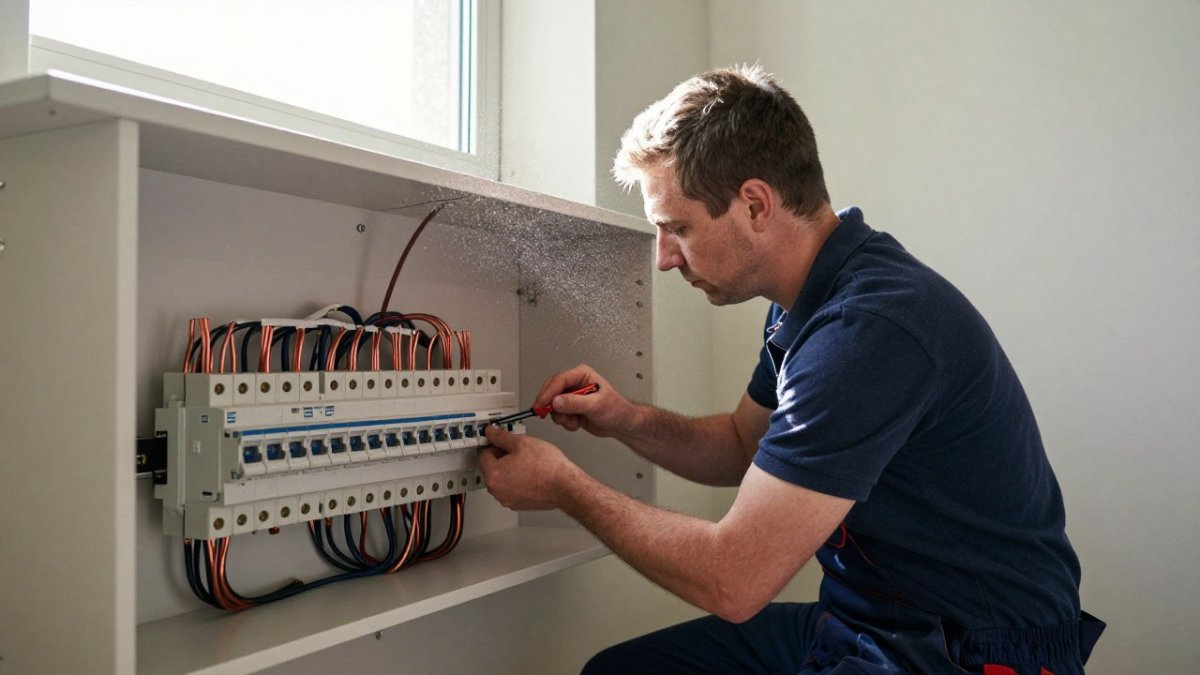
A consumer unit, often still called a fuse box, needs replacing when it lacks RCD protection, contains obsolete rewirable fuses, shows signs of overheating, or cannot accommodate the circuits a modern home requires.
Bright Sparx Electrical is Part P registered and works to the 18th Edition of the Wiring Regulations.
Signs your fuse box is due for replacement:
Rewirable fuse carriers rather than circuit breakers
No RCD protection on socket or lighting circuits
A unit that is warm to the touch or shows scorching
Fuses that blow repeatedly with no clear cause
No spare ways for new circuits
If you are unsure which category your unit falls into, our article on the signs your fuse box needs replacing covers the detail in full.
EICR Cost UK: What an Electrical Safety Check Involves and What It Reveals
An EICR, or Electrical Installation Condition Report, is a formal inspection and testing procedure that assesses whether an electrical installation is safe to use (Periodic Inspection and Testing).
In practice, an electrician isolates circuits, tests insulation resistance, checks earthing and bonding, inspects the consumer unit and accessories, and samples the wiring at accessible points before issuing a written report.
The cost of an EICR depends on property size, age, the number of circuits and whether faults are found. Ask for a clear breakdown before work begins: how many circuits are being tested, whether the price includes the certificate, and whether remedial work is quoted separately.
What the report reveals matters more than the price. An EICR grades every observation using a standard code:
C1, Danger present. Risk of injury. The defect must be made safe immediately, often by isolating the circuit before the engineer leaves.
C2, Potentially dangerous. The defect could become dangerous under fault conditions and requires urgent remedial action.
C3, Improvement recommended. The installation is safe but does not meet current standards; the improvement is advisory.
FI, Further investigation required. The engineer has identified something that needs deeper testing before it can be coded.
A report with any C1 or C2 finding is classed as unsatisfactory, and remedial work is needed before the installation can be considered safe. A report with only C3 observations is satisfactory, though the advisory items are worth budgeting for.
Landlords in particular need to know how long the process takes before booking. Our guide on how long an EICR takes sets out the timescales, and if you want to know exactly what happens on the day, read what happens during an electrical safety inspection.
Everyday Habits That Prevent Electrical Fires: Sockets, Chargers and Appliances
Most electrical fires in occupied homes start with everyday habits rather than catastrophic failures. Overloaded extension leads, daisy-chaining power strips, cheap incompatible chargers and neglected appliances account for a large share of incidents that a few simple changes would prevent.
Start with extension leads. A single lead has a rating, and plugging a heater, a kettle and a tumble dryer into one strip exceeds it. Never daisy-chain one extension lead into another; that multiplies the load while hiding the risk. If you need more sockets, have more sockets installed.
Charging practices matter too. Use chargers that match the device, avoid charging on soft furnishings or under pillows where heat cannot escape, and unplug when charging is complete. Cheap unbranded chargers are a false economy.
For appliances, keep white goods clean and well ventilated. Clear the lint from a tumble dryer filter, vacuum behind the fridge, and check that the plug and cord on older appliances are not frayed. If a plug or cord is damaged, replace it rather than taping it up.
Finally, test your smoke alarms regularly and make sure everyone in the house knows the fire escape plan. Working alarms buy the time that prevents a small electrical fault becoming a serious fire.
DIY Versus Professional Intervention: Where the Line Sits
Replacing a plug, changing a light bulb or swapping a fuse in a plug is safe DIY territory. Anything involving the consumer unit, new circuits, exposed wiring inside a wall, or work in a bathroom or kitchen zone is not. The line sits where the work becomes notifiable and where a mistake can kill.
If you are used to small DIY jobs, expect regulated work to feel different. It requires testing, certification and a paper trail, not bureaucracy for its own sake, but how a homeowner or landlord proves the installation is safe.
Where the line clearly sits:
Safe to DIY: replacing a plug, changing a lamp, resetting a tripped RCD once
Call an electrician: any work on the consumer unit, new sockets or circuits, fault finding, anything in a special location
Never DIY: work on live conductors, earthing and bonding, or anything you cannot certify
Homeowners weighing up a professional callout will find our guide to rewiring old houses in South Wales useful for understanding what a full rewire involves and when it is the right answer rather than a repair.
Older homes carry risks that a visual check will never reveal, and guessing at the state of your wiring is not a risk worth taking. Bright Sparx Electrical provides a free full inspection so you know where your installation stands, with work carried out by our in-house team and certified and insured. We are Part P registered and 18th Edition compliant. Get started with Bright Sparx Electrical and put your mind at rest about the electrics in your home.
The article draws a clear line between jobs you can safely tackle yourself and work that must go to a registered electrician.
Category | Examples | Action |
Safe to DIY | Replacing a plug, changing a lamp, resetting a tripped RCD once | Do it yourself |
Call an electrician | Consumer unit work, new sockets or circuits, fault finding, special locations | Book a professional |
Never DIY | Live conductors, earthing and bonding, anything you cannot certify | Do not attempt |
Frequently Asked Questions
What are the signs that an older home needs rewiring?
Look for sockets or switches that feel warm, fuses that blow repeatedly, a burning smell near outlets, flickering lights when appliances start, and blackened or scorched faceplates. Round-pin sockets, fabric-covered cables and a fuse box with rewireable fuses all point to wiring that predates modern standards. Any of these signs of faulty wiring in old houses warrants a prompt inspection rather than a wait-and-see approach.
How often should electrical systems be inspected in older properties?
An Electrical Installation Condition Report is recommended every ten years for a privately owned home, and every five years for rented property or anything with a swimming pool. Older properties with original wiring benefit from an earlier check, particularly after a major renovation or a change of occupancy. An inspection confirms whether circuits, earthing and bonding still meet current requirements.
Are old fuse boxes a fire hazard?
They can be. Fuse boxes with rewireable fuses and no residual current device offer far less protection than a modern consumer unit, and they give no protection against earth leakage or many arc faults. Consumer unit upgrade regulations require new work to meet current standards, so a board that cannot accommodate RCD protection usually needs replacing before any significant alteration.
Can I upgrade my consumer unit without a full rewire?
Sometimes, but it depends on the condition of the existing circuits. An electrician will test insulation resistance and continuity first. If the wiring passes, a board upgrade is straightforward. If insulation has perished or earthing is inadequate, fitting a new consumer unit alone will not make the installation safe, and a partial or full rewire becomes the sensible route.


Comments